Create Cozy Corners Inspired by New York Penthouse Luxury
Great homes always teach us something about design. In the most admired apartments, lofts, and townhouses, every element is intentional — from the art on the wall to the rug underfoot. Rugs are storytellers. They shape space, set mood, and anchor personality.
From a soaring New York penthouse to a calm Upper West Side apartment, here are five key decor lessons inspired by extraordinary homes — all told through the rugs that ground them.
1. Round Rugs
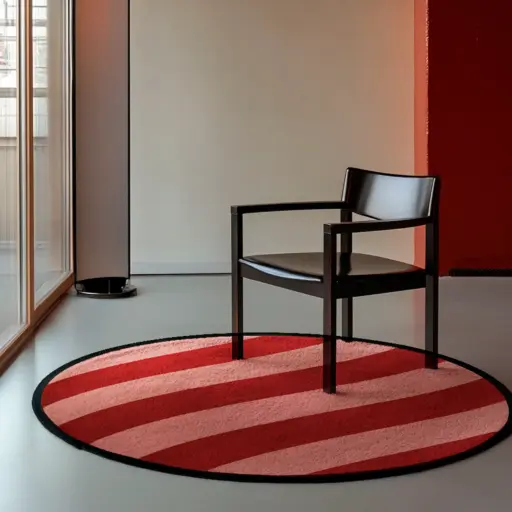
A square room often feels too rigid. Round rugs solve that. They soften sharp edges and bring movement to interiors.
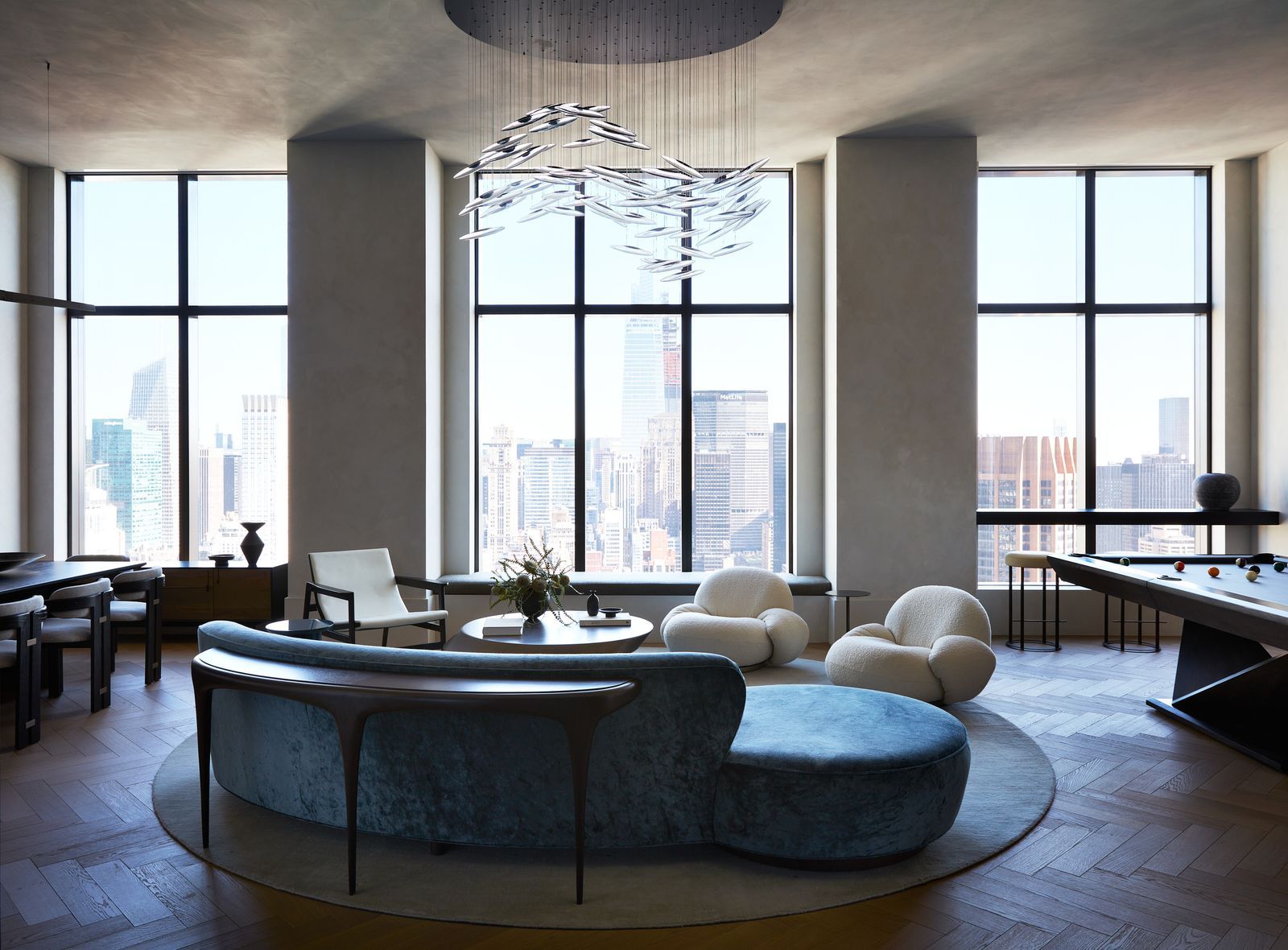
In many open-plan apartments, designers often use a round rug to create a sense of intimacy. A circular rug under a round dining table builds harmony. In a seating area, it draws chairs into a natural conversation circle, eliminating dead corners.
One New York penthouse in NoMad uses this technique beautifully. Amid fumed oak, bronze, and travertine, a round rug interrupts straight lines with gentle curves. The balance makes the space feel less formal, more welcoming.
Lesson: Add a round rug to make your home feel less square. It introduces rhythm and comfort.
2. Minimal Rugs
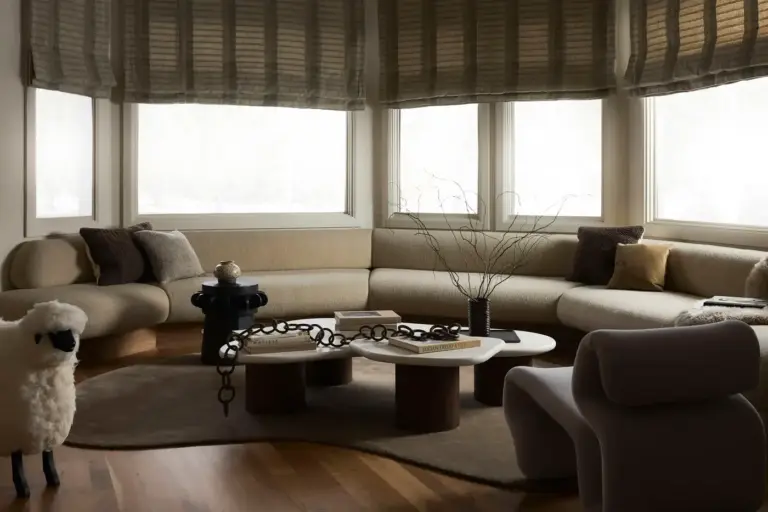
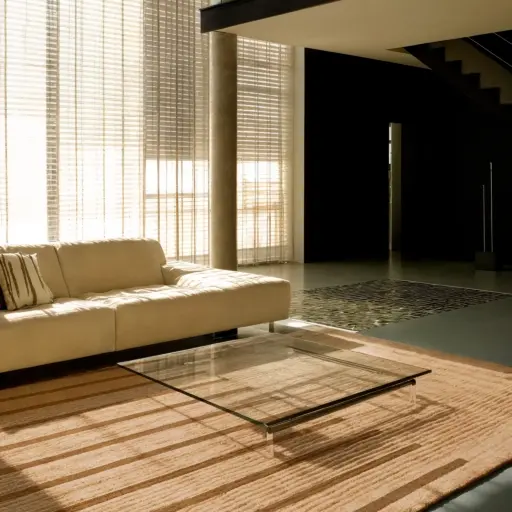
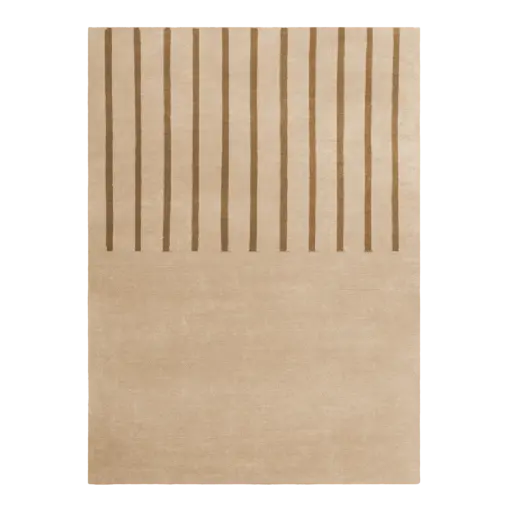
Minimal rugs prove that less is more. They create a calm canvas for architecture and furniture without stealing attention.
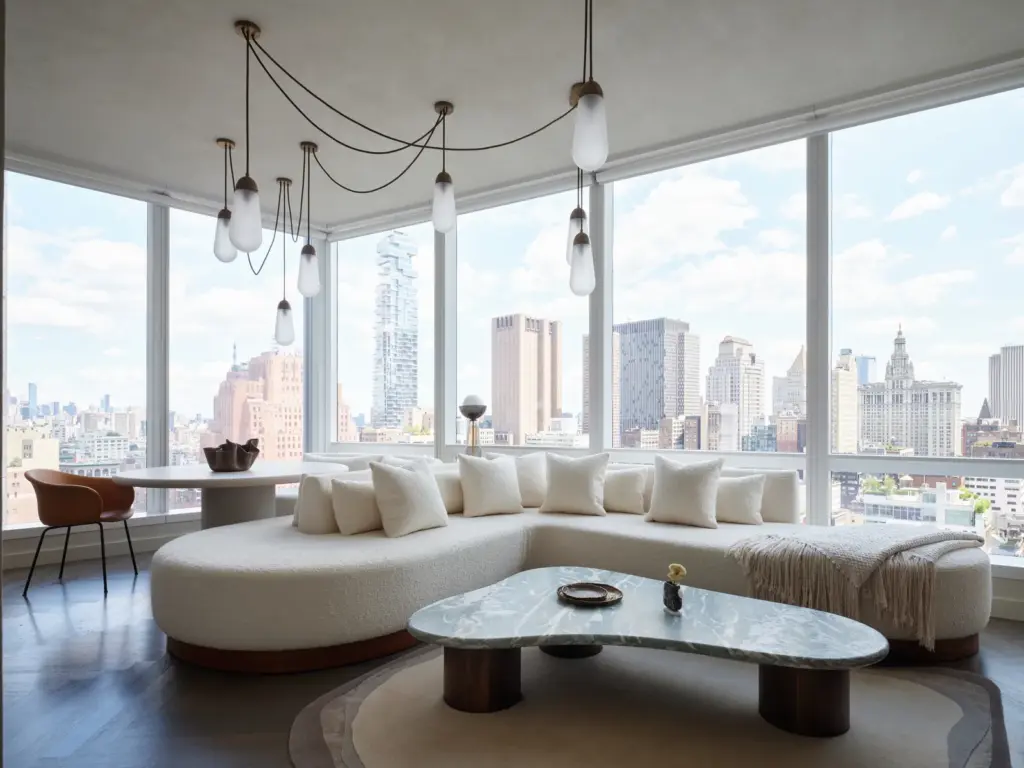
A small Tribeca pied-à-terre is a perfect case. The designer introduced plaster walls and walnut details, but kept the rug quiet. Its understated tone allows textures and built-ins to stand out. The sofa, wrapped in performance fabric, combines practicality with luxury.
Minimal rugs are about restraint. They let wood, stone, and plaster breathe. They highlight form instead of competing with it.
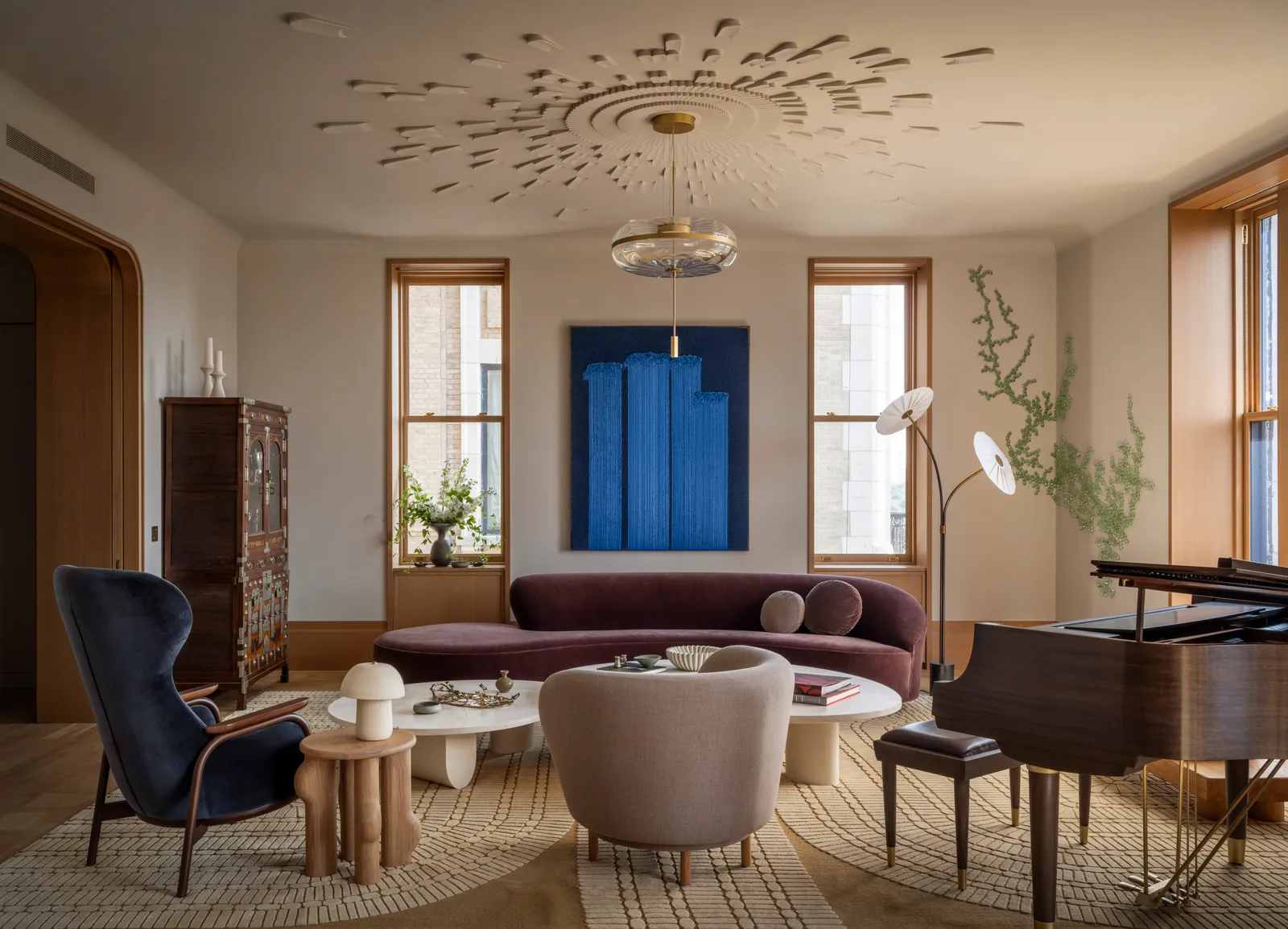
In compact spaces — or even a grand New York penthouse — a minimal rug creates calm. It makes rooms feel lighter, larger, and less cluttered. Here, a fluid marble coffee table and sculptural lighting feel grounded precisely because the rug recedes into the background. The entire composition gains harmony, letting skyline views take center stage.
Lesson: Use minimal rugs when you want peace and visual clarity.



3. Contemporary Patterns
Patterns add energy. They connect history to the present.
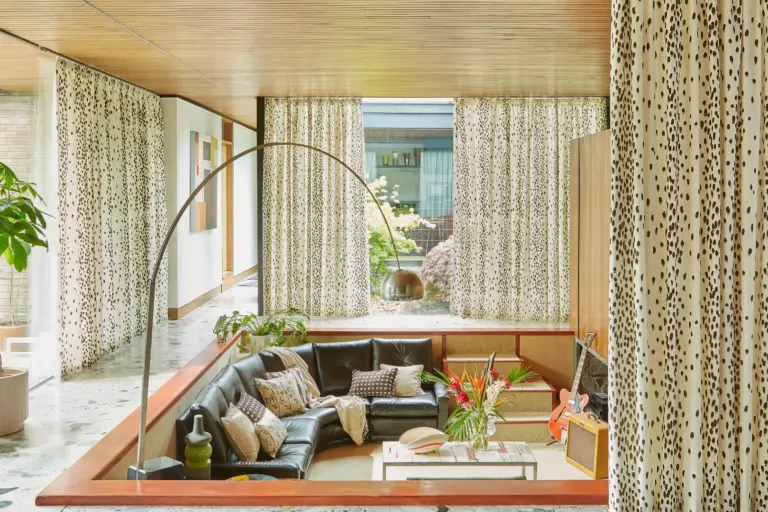
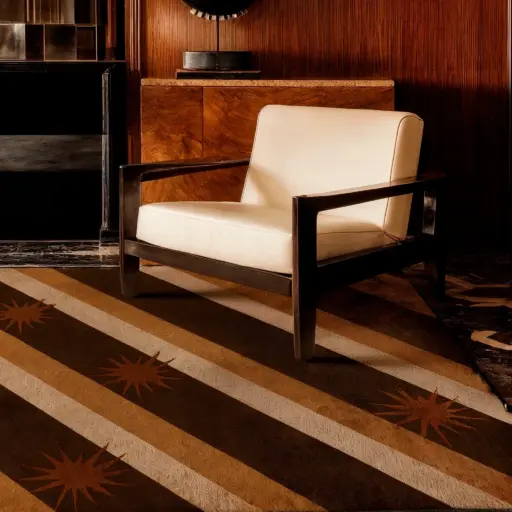
In a West Village triplex, a rug with subtle geometric lines bridges English country charm and Art Deco glamour. The pattern feels modern yet timeless, seamlessly blending traditional architecture with contemporary elements.
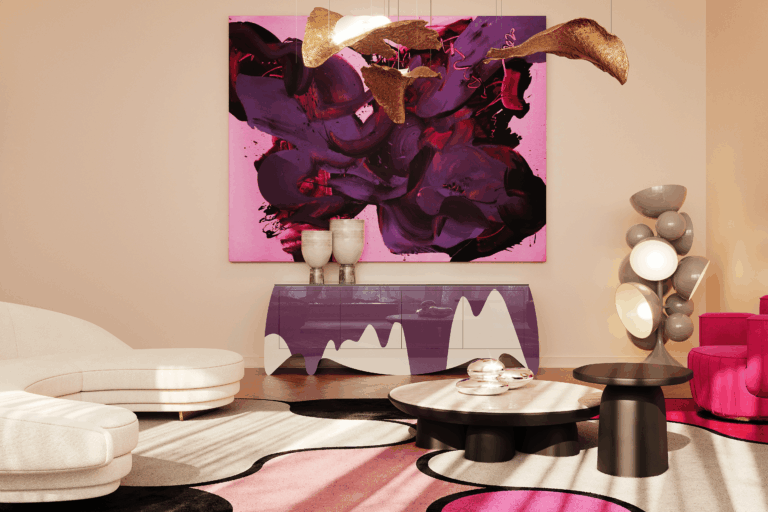
In another New York penthouse, vintage Chinese Art Deco rugs layer with reflective furniture and sculptural lighting. The result feels theatrical — a stage for gatherings, not just a home.
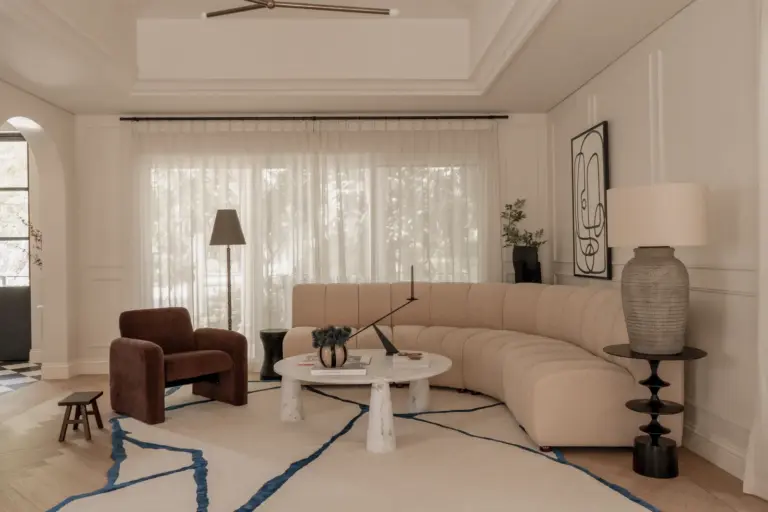
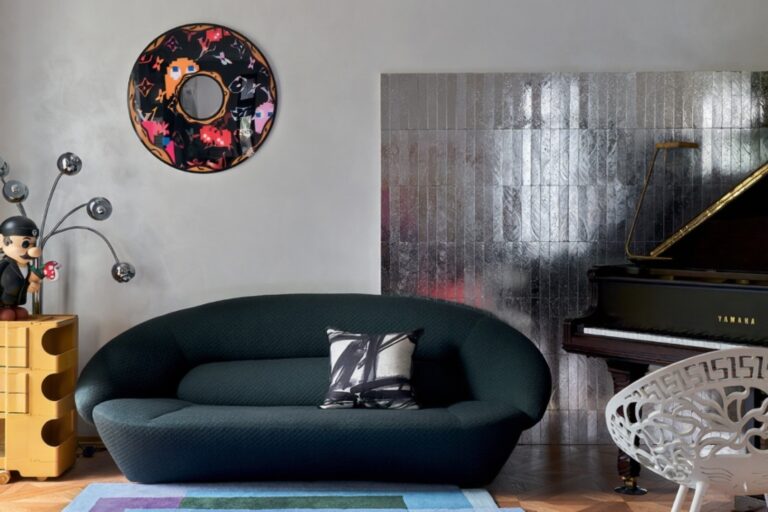
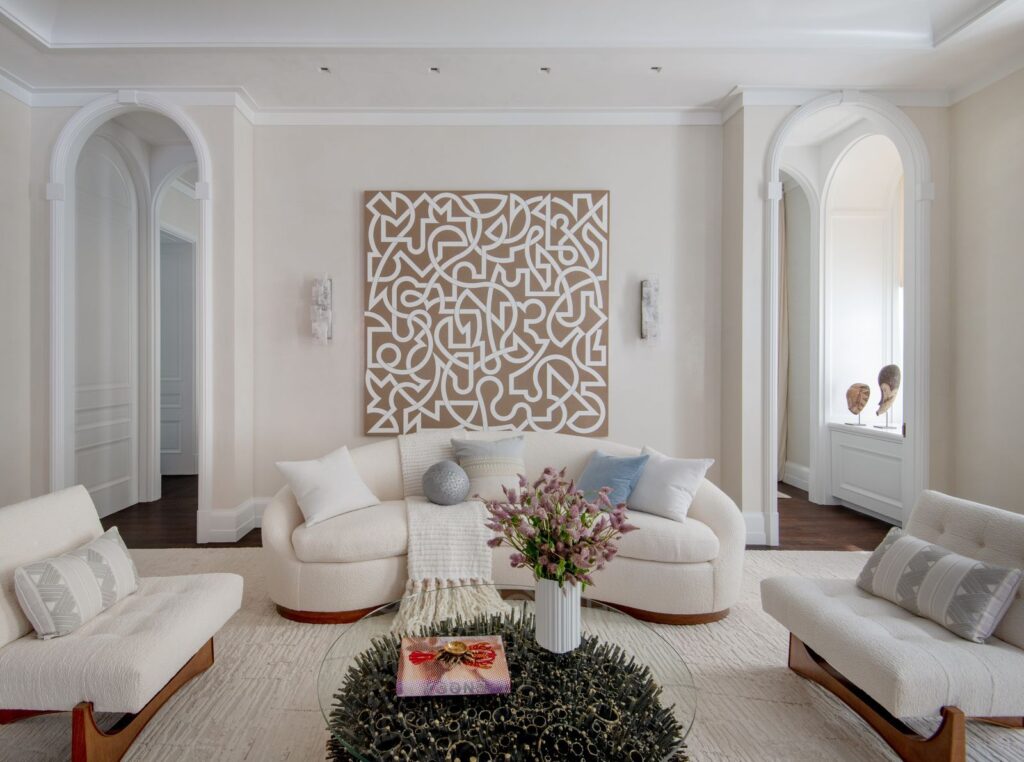
Contemporary patterns are versatile. Some are bold and graphic, others soft and abstract. Either way, they animate a room without overwhelming it. Here, a large abstract wall piece serves as the pattern, softly echoed in the neutral rug below. Together, they bring rhythm to a serene living room of curved sofas and creamy tones.
Lesson: Choose patterned rugs to add personality and energy to otherwise calm interiors.
4. Unexpected Shapes
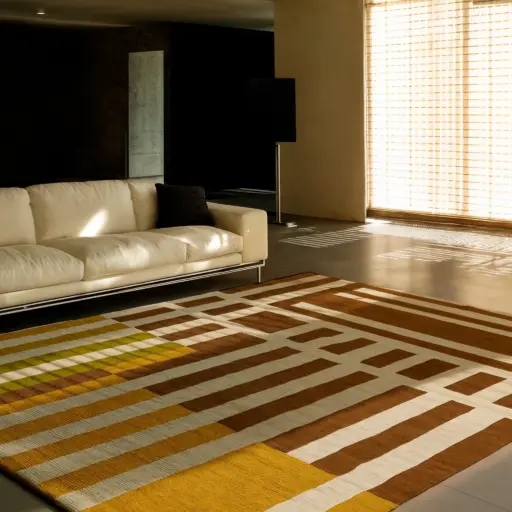
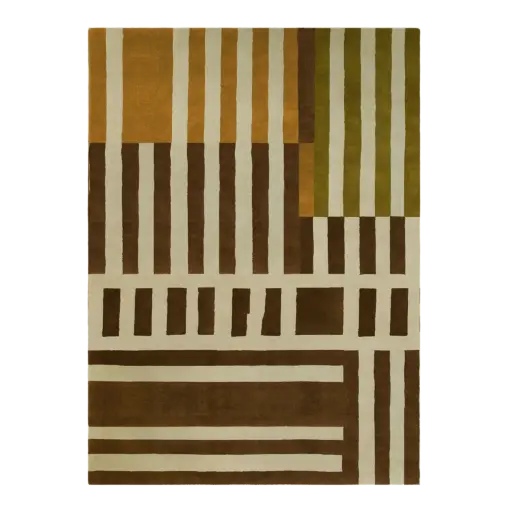
Why should rugs always be rectangles? Shape is a design tool, and unexpected silhouettes redefine how rooms are experienced.
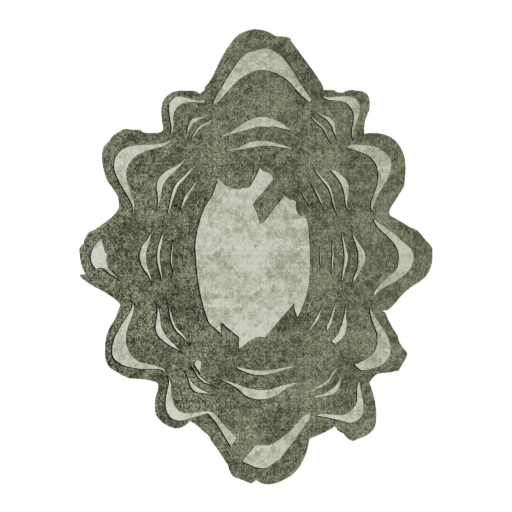
On the Upper West Side, one apartment overlooking the park uses chrysanthemum-shaped rugs. Their petal outlines echo floral details in the ceiling and lighting. Instead of merely covering the floor, the rug becomes an integral part of the architectural narrative.
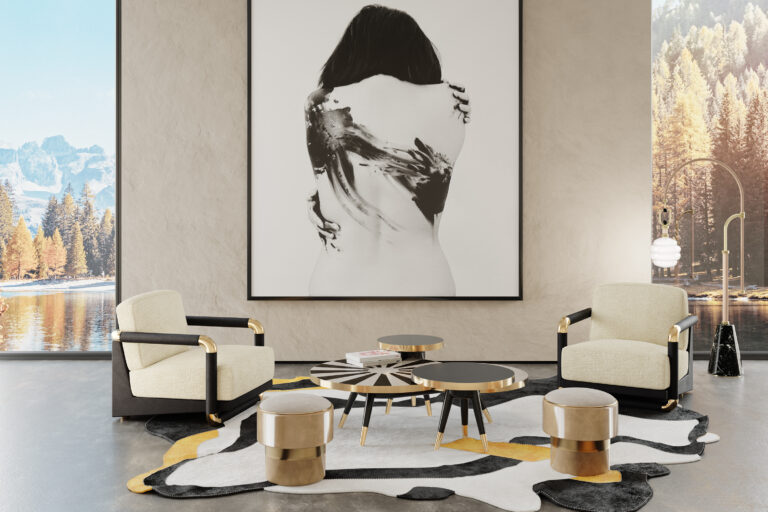
Asymmetrical rugs break monotony in open layouts. A kidney-shaped rug hugs a sofa, making the space feel intimate. A jagged-edge rug injects movement into a minimalist palette.
Even in a sleek New York penthouse, an unexpected shape can turn a rug into sculpture. It creates zones, sets energy, and challenges convention.
Lesson: Don’t think of rugs as background. Use shape to surprise and delight.
5. Bold Color
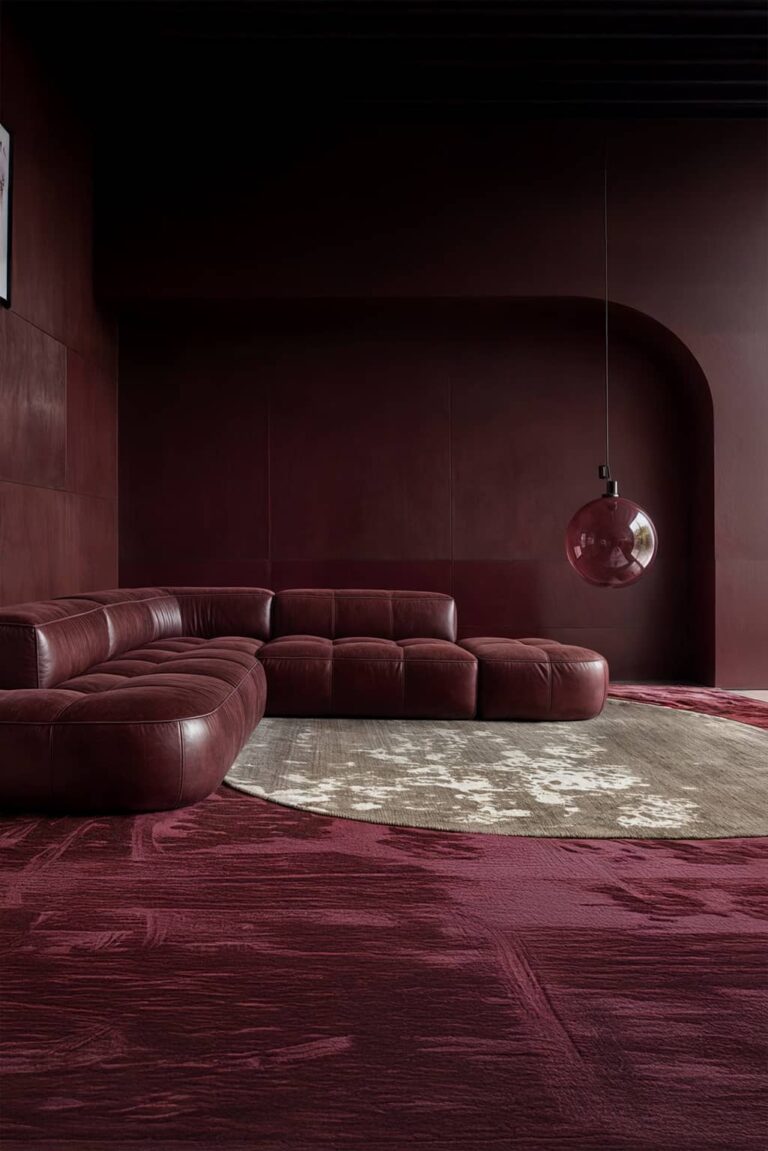
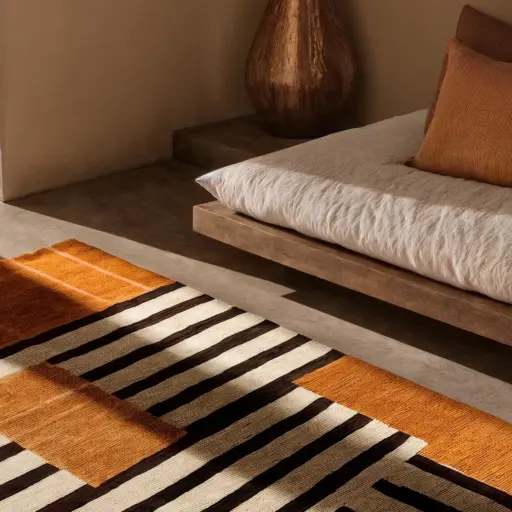
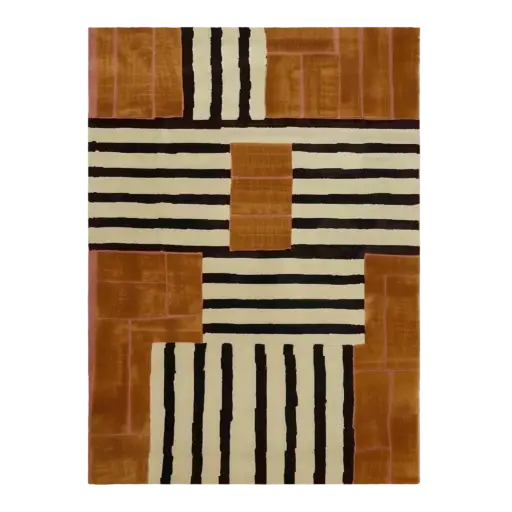
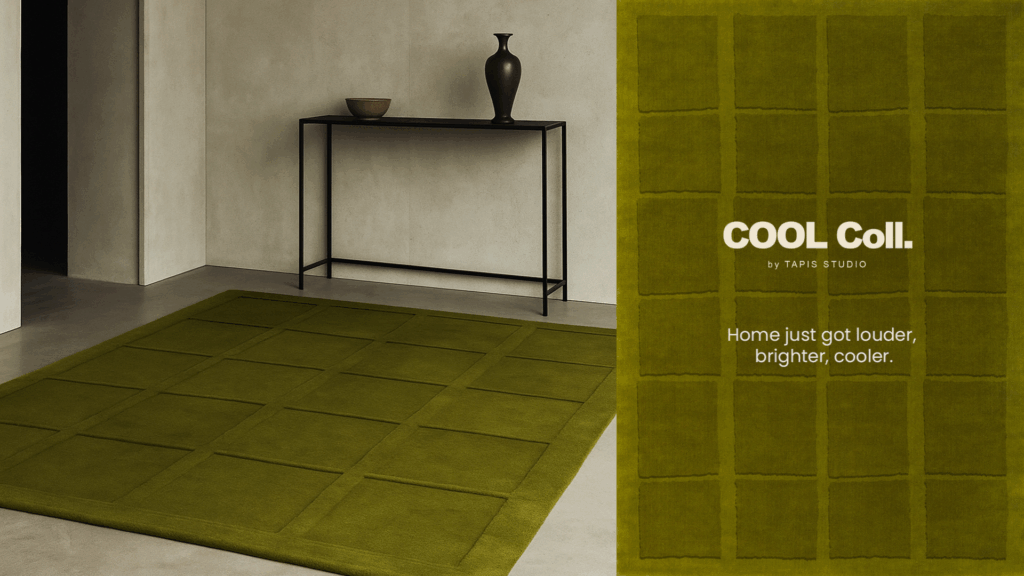
Color is power. In a New York penthouse, it can transform glass and steel into warmth and a sense of identity.
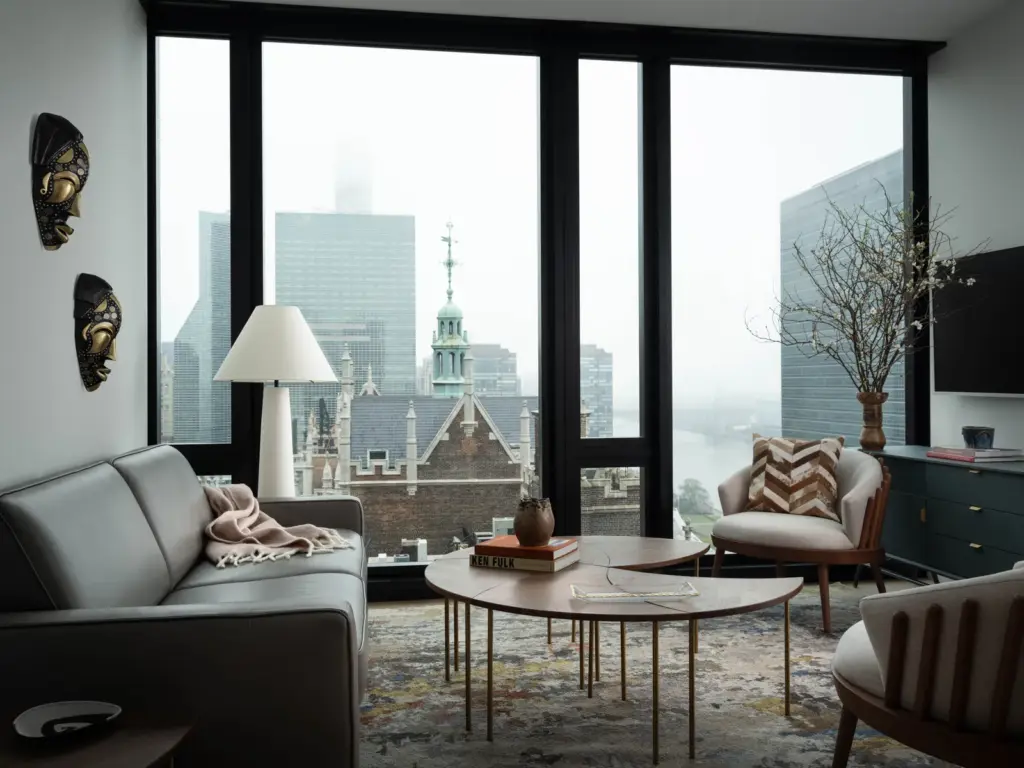
This 67 sqm pied-à-terre on the 31st floor of a Richard Meier tower shows how. Designer Ahmad Abou Zanat integrated Cameroonian heritage into a modern setting. Handcrafted masks line the wall, while a textured rug spreads earthy tones — clay, moss, stone — across the floor. These shades echo traditional materials yet soften the sleek frame of the tower.
Leather, velvet, and walnut add depth. Brass and marble bring modernity. Most importantly, each family member’s favorite color is expressed within a calm, natural palette. The rug becomes the thread that ties personality, culture, and architecture together.
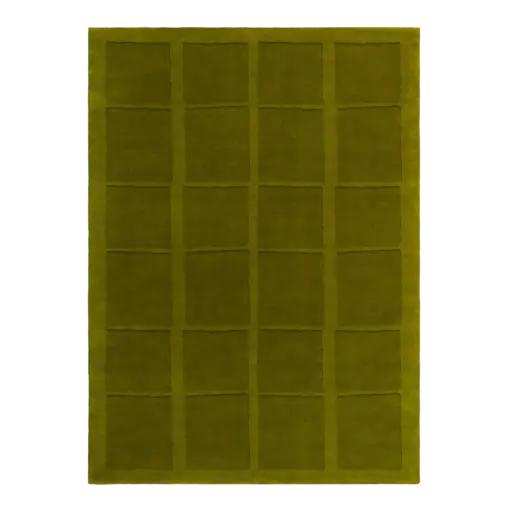
Here, bold color is not neon or primary. It is clay red, aged brass, and moss green. These hues are rich, confident, and deeply personal.
Lesson: Bold color in rugs can be subtle. In a New York penthouse, use earthy richness or jewel tones to ground the space and tell a story.
Putting It All Together
These five rug lessons share a single truth: rugs are not afterthoughts. They are architecture underfoot. They guide flow, connect rooms, and set atmosphere.
- Round rugs balance strict layouts.
- Minimal rugs create peace.
- Contemporary patterns add energy.
- Unexpected shapes surprise.
- Bold color defines identity.
The most beautiful homes — whether a brownstone triplex or a glass-walled New York penthouse — prove that rugs can change how a space feels as much as a chandelier or wall finish.

Lasting Design Secrets
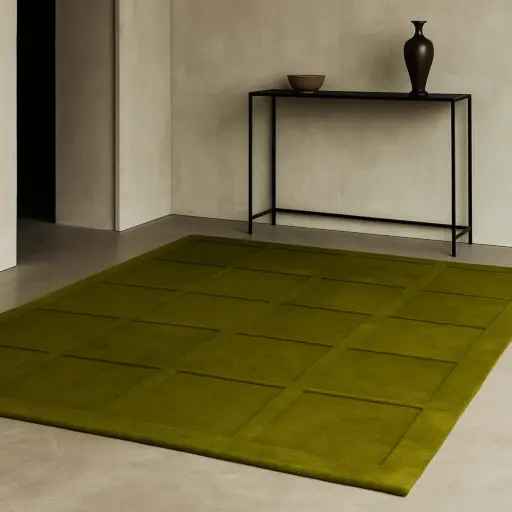
A good rug changes a room. A great rug changes how people live inside it. That’s the lesson from the most beautiful homes — and from every penthouse that dares to dream from the ground up.
Discover the rug color and shape that suits your style. Browse our complete collection and download our latest catalogue to transform every room into a space you love.
Source: AD